
By Rayan Makarem, Director of Policy and Advocacy, and Avery Jones, Community Organizer
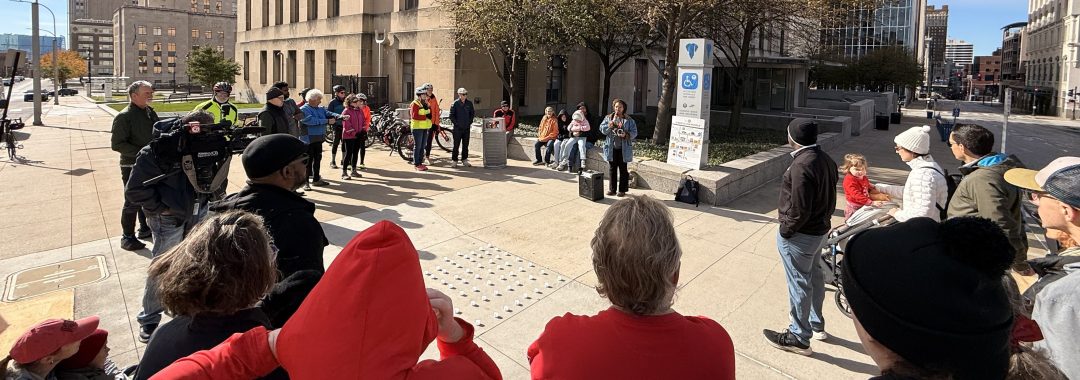
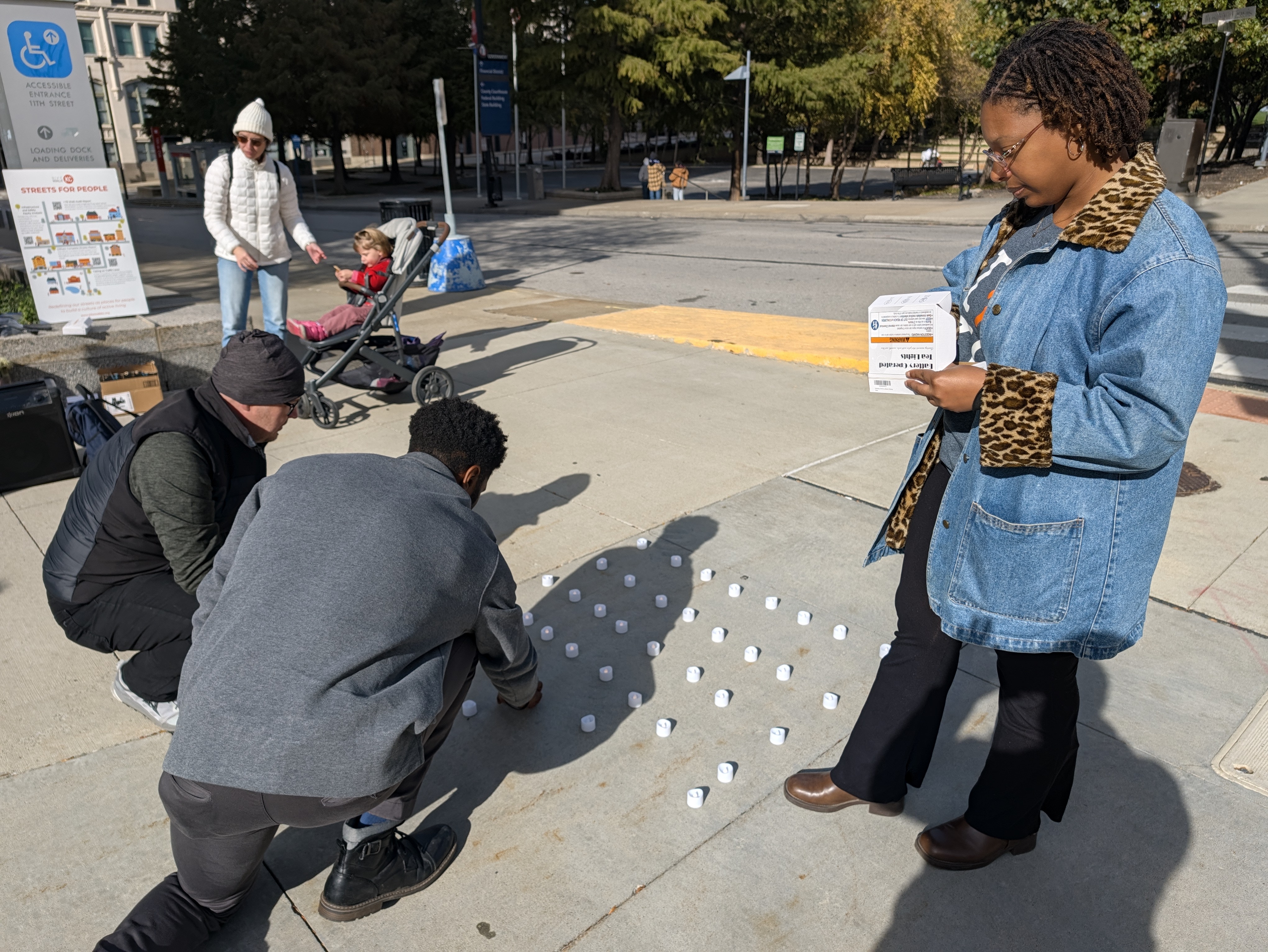
On World Day of Remembrance for Road Traffic Victims, we gathered people with varied relationships to traffic violence. Some joined us in hopes that we can create a city that allowed them to walk, bike and drive safely. Others joined in memory of loved ones past. Violence survivors were present, who had various levels of recovery from their crashes.
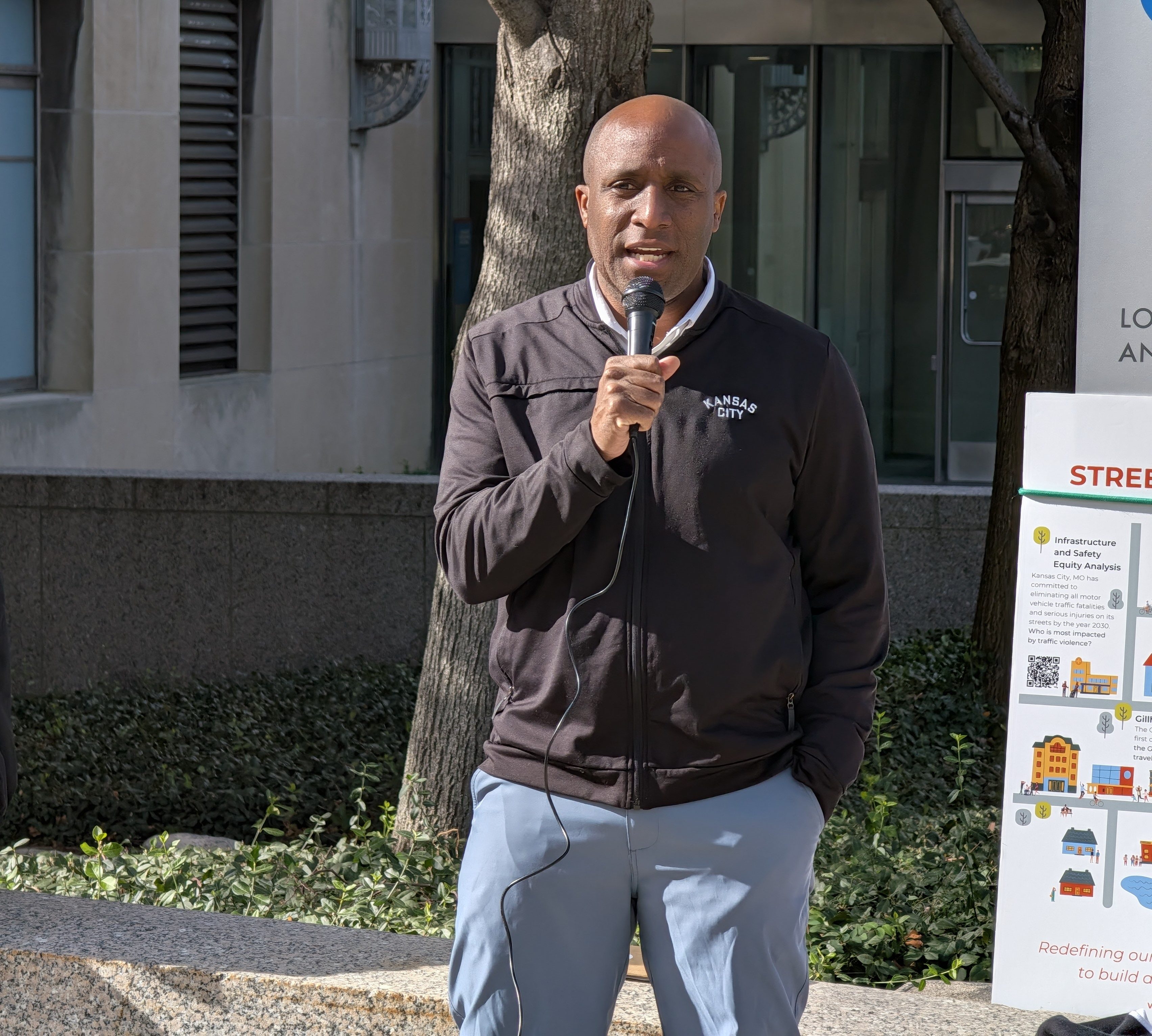
We came together and heard from community advocates, Mayor Quinton Lucas, and community members who stepped forward to share their stories. The event expressed our commitment to not accepting traffic violence as a part of life. Instead, we reflected and shared ways to advocate for change.
Change can only happen when people show up and demand a difference. Last year, we lost a bright light in our community when an elementary school student was tragically hit and killed while riding her bike to school. The city responded with preventative action, passing the ban for right turns on red for school zones. This simple change is merely a building block in preventive measures. It cannot be the end of the conversation, and we must continue to push for these kinds of transformations to prevent future tragedies.
If crashes are predictable, then crashes are preventable
In 2025, 68 people were killed, a 30% decrease from 2024. However even as we saw a decrease, the number of vulnerable road users (pedestrians and cyclists) increased. So far this year, 63 people have lost their lives to traffic violence, with several of those deaths occurring within the past 2 weeks. At this same time last year, the number was 57. Every person we have lost deserves for us to seriously commit to preventing traffic violence the best we can through policy change, driver education and infrastructure change.
We do this work by gathering and identifying dangerous areas and patterns, and working with our neighbors and decisionmakers toward a solution. We do this work by acknowledging victims and caring for their families. We do this by funding Vision Zero, the fund created in 2021 showing the city’s commitment to zero traffic fatalities by 2030.
The 30% decrease shows that implementing Vision Zero projects and investing in traffic calming does make a difference. Unfortunately, we are now at 63 lives lost in 2026, and more must be done for our goal of 0 by 2030. Vision Zero funding was cut by over 25% this year, and a repeat of that will lead us farther away from that goal.
Our request for everyone:
- Mark your calendars and be on the lookout for KCMO 2027 budget hearings. There is even an early budget survey and 3 early public meetings in December this year. We need the city to know people will show up for funding Vision Zero.
- Connect with us about how to get plugged in more deeply or how to solve any safety issues in your area. Email us at policy@bikewalkkc.org or log in to one of our monthly Advocacy Office Hours on Zoom.
- In your daily lives, let people know that this rampant traffic violence is not normal and that we don't have to accept it. Talk about the people we have lost, the times you've felt unsafe or someone you know was hit. We should not accept this status quo, and we must advocate for meaningful change.
What is traffic violence?
Traffic violence is a term used by street safety advocates and public health organizations to describe "death and serious injury caused by motor vehicles" on public roadways, framing them as preventable systemic and design failures rather than mere "accidents."
This webpage covers the explanation well, and we quote:
- “calling collisions ‘accidents’ implies that crashes are unavoidable acts of fate, which lets road designers, policymakers, and drivers off the hook for dangerous conditions.”
- “It emphasizes that infrastructure choices—such as wide, high-speed roads, poor pedestrian crossings, and a lack of protected bike lanes—collectively create a lethal environment.”
- “Public Health Crisis: It treats roadway fatalities (which total tens of thousands of preventable deaths annually in the U.S.) as an epidemic that requires structural intervention.”
- "Violence that occurs in the traffic realm is, by definition, traffic violence. A car crash is always a car crash, even if the driver is ultimately found not guilty of criminal negligence. And when we feel a sense of unease saying these words, it is because we have been raised in a culture that has systematically and deliberately worked to shift the blame for that violence onto victims, down to the subtlest workings of the language in the news reports we read."
We recommend the Families for Safe Streets webpage for a deeper dive and detailed information. It is their mission to advocate for the victims of road violence and address this systemic issue that affects us all
While it may not be the malicious intent of the driver to cause a crash, there is a systemic failure from our designers, policy-makers, and road users (speeding, insufficient driver education) which causes this traffic violence.
Rayan Makarem is BikeWalkKC's Director of Policy and Advocacy. He's a child at heart who believes that age is just a number. Rayan gets lost quite often in the realms of fantasy and whimsy.

Avery Jones is BikeWalkKC's Community Organizer and a unicorn of love and light. She lives for moments of joy and community, and once witnessed half the bus erupt into a gospel number in four-part harmony.