By Avery Jones, BikeWalkKC Community Organizer
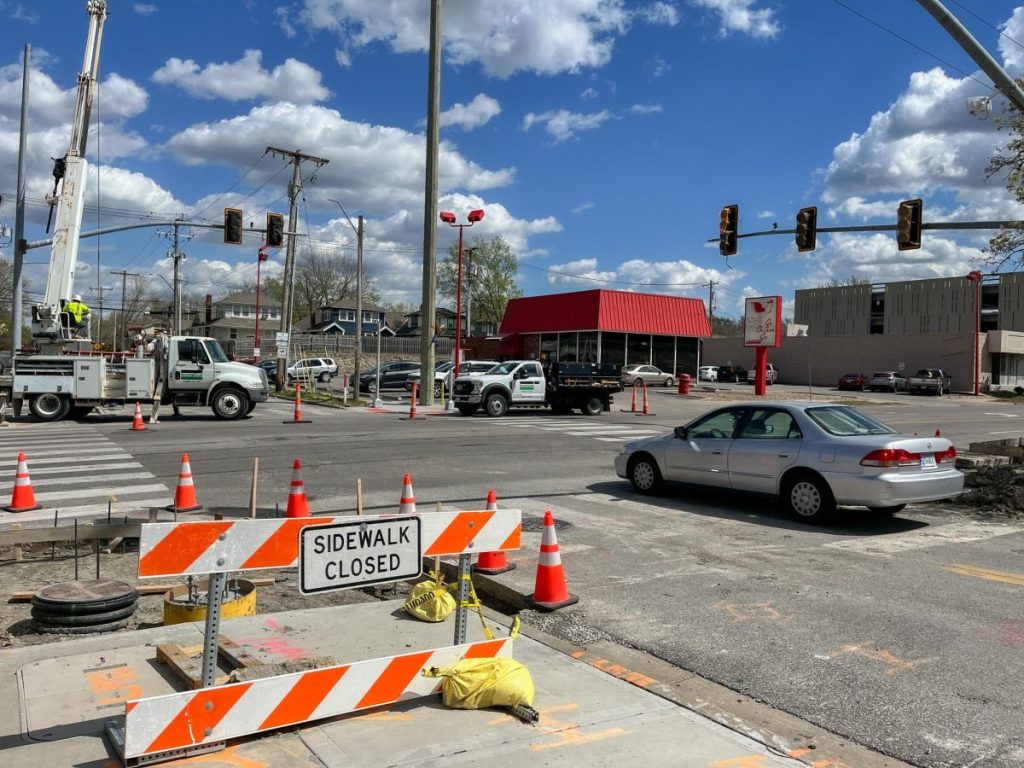
For years, neighbors and students raised concerns that the intersection at 51st Street & Troost was unsafe. When Yuxi Wu, a University of Missouri-Kansas City (UMKC) conservatory student who planned to graduate with a degree in piano performance, was tragically struck and killed on September 26, 2024, the concerns became demands. Residents and students expressed how much they care for their neighborhood and for Wu’s memory by advocating for a stoplight - an intervention that would greatly increase the safety of anyone stepping foot or wheel across 51st Street and Troost Ave. The stoplight, which was installed this May, represents the successful persistence of Wu’s classmates and the surrounding community to prevent this kind of predictable traffic violence in their area.
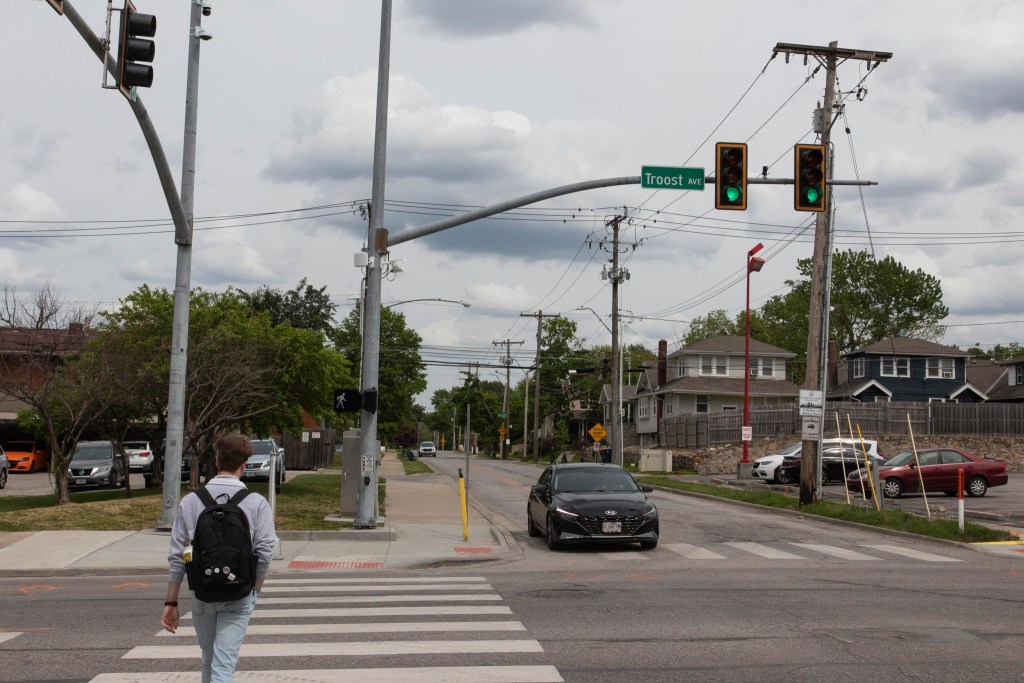
A student crosses Troost Ave. at 51st, where a new stoplight was installed after Yuxi Wu was killed by a driver in 2024.
How dangerous is 51st Street and Troost?
- Troost is on the Kansas City, Missouri's High Injury Network, a map that tracks the streets with disproportionately high rates of traffic related injuries and fatalities. Troost rates as one of the most dangerous streets in the city, with 16 fatalities and 65 injuries from 2015-2019.
- At the 51st and Troost intersection alone, there were 4 fatalities from 2019-2024.
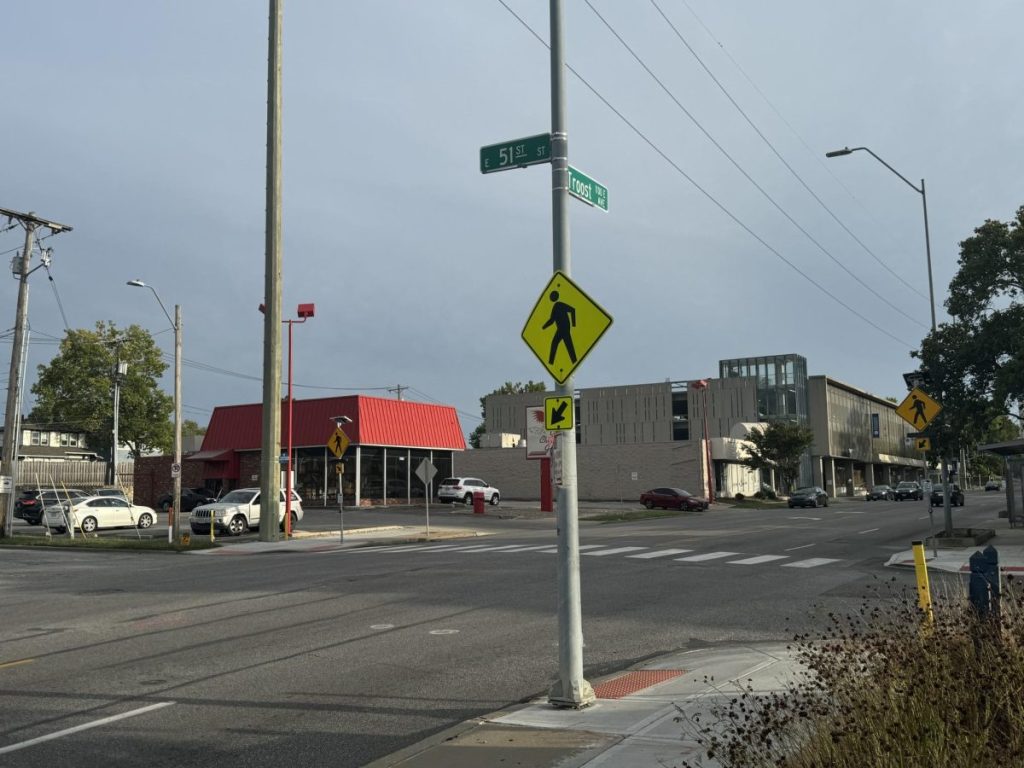
- A flashing crosswalk was installed in 2024 at 51st and Troost, but it did little to prevent drivers from speeding, regardless of the presence of pedestrians or cyclists.
What makes 51st Street and Troost so dangerous?
- 51st Street and Troost attracts a lot of pedestrian, car, bike and scooter activity. It lies between Troostwood neighborhood homes, UMKC, Rockhurst University, and restaurants like Go Chicken Go.
- Troost is a five-lane road that sees much less car traffic than was predicted in its inception. Studies show that drivers tend to speed when there are wider lanes with a surplus of space to maneuver.
- According to the Vision Zero Action Plan, roads configured with this many lanes are significantly more likely to produce crashes than two or three lane roads.
People stepped up and worked together to make change
Reporting the problems using the available tools
In the years leading up to the 2024 crash, Troostwood residents and UMKC students were reporting their concerns through channels like 311 and the Public Infrastructure Advisory Council (PIAC). The neighborhood made sure their concerns were heard in meetings and conversations with decision makers. It became common knowledge that the crosswalk was dangerous and in need of intervention.
In early 2024, UMKC graduate student Iain Blair’s PIAC request was granted, resulting in a flashing crosswalk installation. The flashing crosswalk was a win for the neighborhood. It was the best option they had at the time and was a material step forward. However, as evidenced by the continued violence, it was only a first step. Dangerous intersections with high pedestrian usage do need crosswalks. They also need speed control measures just as strong as the street is dangerous if people crossing are to be kept safe.
Joining forces and escalating their tactics
After Wu was struck, Troostwood Neighborhood Association, 49/63 Neighborhood Coalition and UMKC students joined forces to ensure this was the year a stoplight would come.
UMKC student Alannah Zuber penned a petition to install a stoplight that garnered over 600 signatures. On the petition, several students included messages recalling their dangerous close calls at that intersection and how angry they were that their concerns were not addressed sooner. Some even sent videos demanding an intervention.
While the petition circulated, Finn Meggitt, another UMKC student, reached out to BikeWalkKC for advocacy support. In response, we sent out an advocacy alert that included the UMKC petition along with an email blast to city council members.
Troostwood Neighborhood Association involved council members by inviting them out to the intersection to see the conditions for themselves. As the advocacy progressed, councilmembers Parks-Shaw, Bough, Duncan became proponents for the stoplight. This political support, coupled with staff support from the Public Works Department's Uday Manepalli, pushed the stoplight over the metaphorical finish line.
The $283,000 stoplight was fast tracked using scrap materials that pushed the installation forward to May, about 8 months after Yuxi Wu’s passing. Residents who had advocated for the stoplight finally are reporting feeling much safer crossing 51st Street and Troost.
Where do we go from here?
When it comes to traffic violence, there are far too many instances like Troost Avenue where lives are lost on corridors where the conditions make danger predictable. How do we combat predictable traffic violence?
- More funds for traffic calming measures. Whether it is through the Vision Zero budget or a larger pot of money for PIAC projects in areas with highest need, if there were more money to address High Injury Network Streets, we could begin plans for large-scale traffic calming solutions on all streets like Troost and intersections like 51st Street and Troost. We could have stop lights automatically accompany crosswalks on streets that need them both. Dedicating money to accelerate this process will prevent predictable violence and save lives.
- Implement an evaluation process after installing a traffic safety intervention. When the PIAC-funded flashing crosswalk was installed, many drivers still ignored pedestrians and drove through without considering who might be crossing. This was the case with Yuxi Wu. Evaluating crash data after an installation and checking back in with those who expressed concerns could have sooner exposed the need for a stronger intervention like a stoplight. The city doesn’t have an infinite amount of staff and funding to dedicate to each project, so this is a large ask.
- Show residents how many others have voiced concerns about the same area. Complaints about the intersection were repeated and widespread. If there were a system on 311 or another platform that allowed heavily reported issues to be shown as frequently reported, we could feel a bit more like voicing a concern won’t fall flat and in a silo. Concerned residents could band together early on in the process rather than after tragedies happen. That kind of public data could also be wielded as evidence proving the issue deserves prioritization.
- Provide UMKC students with road user empowerment resources. UMKC student Yunfei Li believes that providing students with advocacy resources and avenues is important. Students are a group that largely relies on walking and biking to get around. In her words, “I think students could benefit from more education about local traffic safety—resources like workshops, guides, or even maps that show where it’s safest to walk or bike would be incredibly helpful. Knowing where to be cautious and understanding our rights and risks as pedestrians could empower more students to advocate effectively and stay safe.”
Students and neighbors came together to prevent another traffic death in their neighborhood. Their efforts led to a solution that could save lives. Walking to and from class, catching the bus, strolling through Troostwood, and even grabbing GO Chicken Go no longer have to feel like life-threatening scenarios when it’s your time to cross the street, and it’s all because of students and neighbors choosing to honor the legacy of Yuxi Wu by keeping each other safe. We hope that traffic violence interventions championed by communities who know what is needed to stay safe will continue to be heard loud and clear, and that decision makers and local governments listen and act before a life is lost.
Avery Jones is BikeWalkKC's Community Organizer and a unicorn of love and light. She lives for moments of joy and community, and once witnessed half the bus erupt into a gospel number in four-part harmony. You can reach her at avery.jones@bikewalkkc.org.