Moberly MO Active Transportation Plan
What: A citywide active transportation plan
When: 2025
Team: BikeWalkKC
Client: Randolph County Health Department and City of Moberly, MO
Funding: Building Communities for Better Health grant program
Thanks to the Building Communities for Better Health (BCBH) grant program, the Randolph County Health Department was able to contract with BikeWalkKC to create the first ever Active Transportation Plan in the region. Moberly, MO falls within the Mark Twain Council of Governments (COG) which serves eight counties. Moberly is the first community within this entire area to create and adopt an Active Transportation Plan!
This Active Transportation Plan (ATP) reviews the City of Moberly’s walking and biking infrastructure. This includes sidewalks, trails, paths, bike lanes, and more. This ATP evaluates how people move throughout Moberly, both for their everyday needs and to recreate. The overarching goal of this ATP is to identify a Priority Sidewalk Network with the most important routes to install sidewalks, allowing people to safely and conveniently reach everyday destinations, such as the grocery store, a place of employment, school, bank, or park without access to a vehicle.
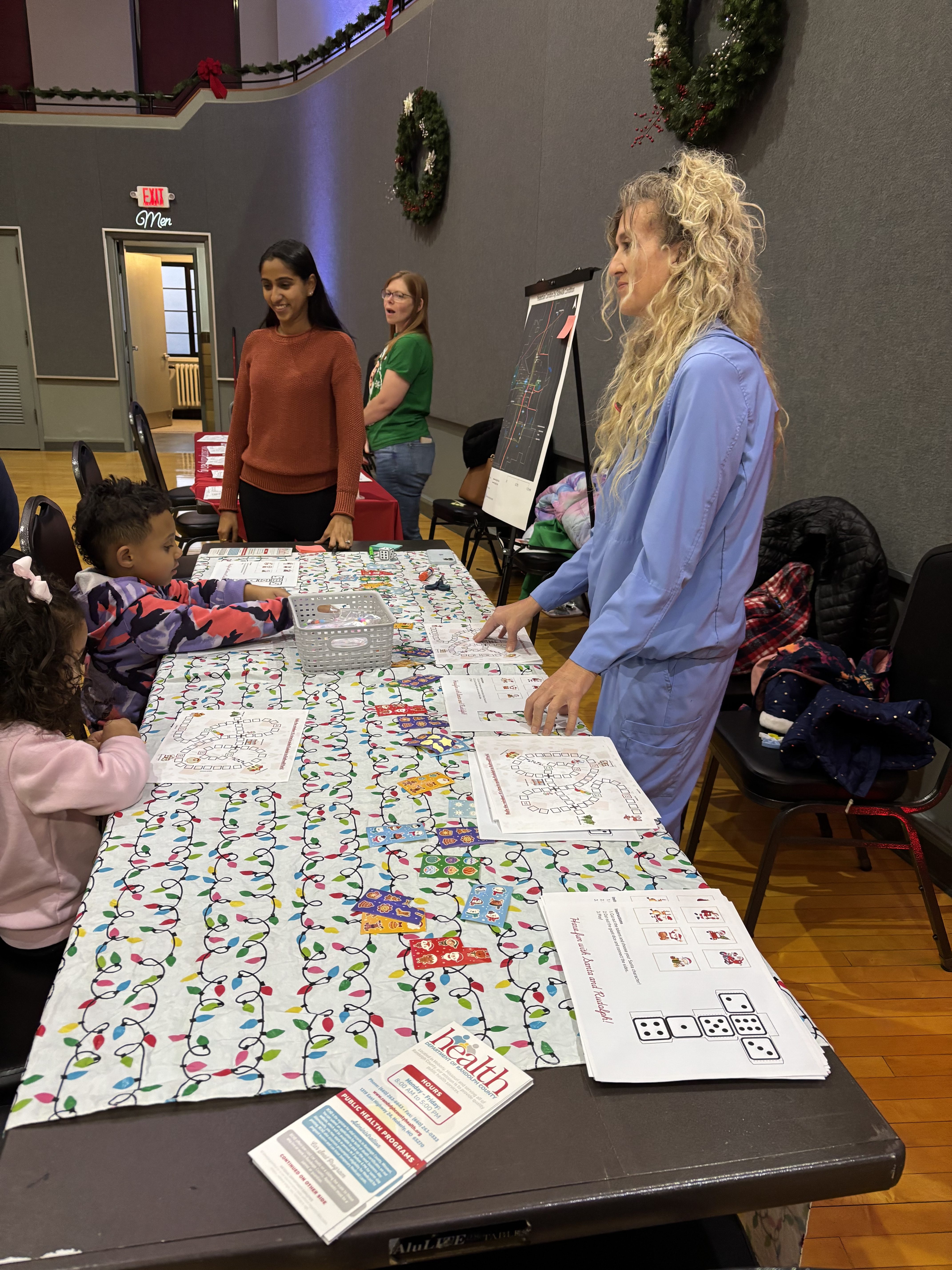
Implementing an almost years-long community engagement approach, the Health Department solicited public input through many mediums, including online and in person surveys, tabling events, open houses, and even creating a transportation board game to receive feedback from children. All of this feedback was digitized into maps that created the foundation for the Priority Sidewalk Network map, a map showing the most important streets in Moberly to add or improve sidewalks when resources become available. Additionally, the City of Moberly Public Works Department worked closely with BikeWalkKC to talk about sidewalk projects on the horizon and what they believed was feasible within the next five to 10 years. The combination of these inputs created the Priority Sidewalk Network map.
Health Department staff also participated in multiple walk audits, alongside other community members, on the streets most complaints were received. These walk audits provided on the ground information about sidewalk and street conditions, lighting, signage, and more.
In addition to the Priority Sidewalk Network map, other recommendations to improve pedestrian safety were provided, including more coordination between the City and Animal Control, increasing awareness about the sidewalk cost share program, implementing a traffic calming policy, and some important municipal code modification to protect vulnerable road users.
View the plan here.